
Quality Through Analytical Insight.
Explore the product information and available analytical documentation that support the evaluation of our research compounds. Review batch references, reported results, and testing methods before selecting materials for your laboratory.
Clear Information for Informed Research.
Assessing a research material requires more than a product name or a purity percentage. Compound identity, analytical methods, batch references, and handling requirements all contribute to an informed evaluation.
At Peptivexal Labs, this page explains how to interpret available product documentation and what to review before using a compound in your laboratory. Product-specific claims should be assessed against the corresponding analytical report.
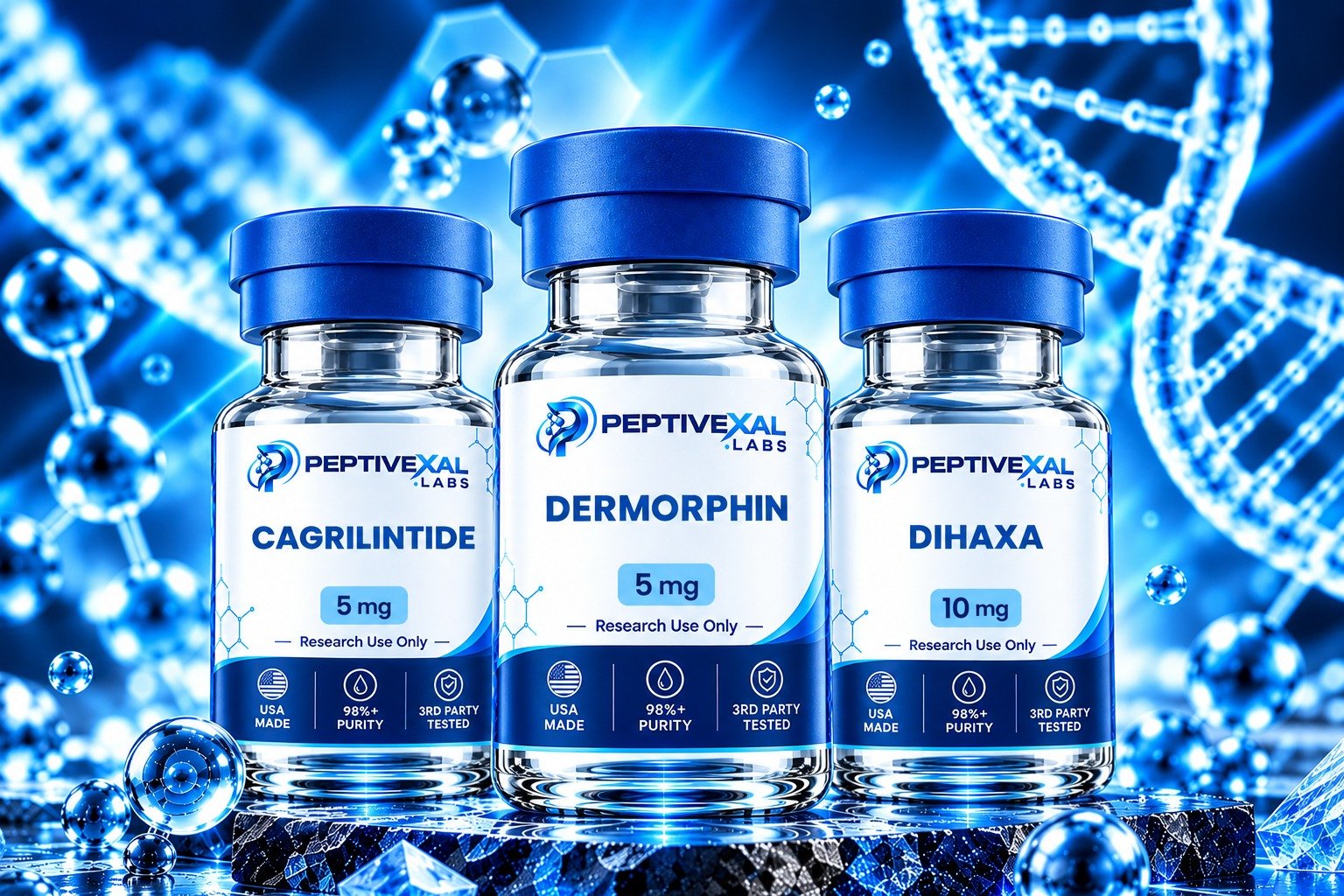
Four Pillars of Material Evaluation
Before using any research compound, consider these core areas that help you make an informed assessment.
Compound Identity
Review the compound name and available identity data to assess whether the supplied material matches your research requirements.
Reported Purity
Examine the reported purity result alongside the method, sample details, and limitations stated in the analytical report.
Batch References
Check that the batch reference on your material corresponds to the documentation you are reviewing.
Documentation Support
Contact our team if you need help locating a report or resolving a product identification discrepancy.
What Analytical Testing Can Tell You
Different analytical methods answer different questions. Refer to the corresponding Certificate of Analysis to confirm which methods were used for a particular sample. The methods described below are educational examples and are not a statement that every product undergoes each test.
HPLC
HIGH-PERFORMANCE LIQUID CHROMATOGRAPHY
HPLC separates components within a sample under specified analytical conditions. A report may use chromatographic peak areas to express purity. The result depends on the method and detection conditions and does not, by itself, establish compound identity, total content, or the absence of every possible impurity.
Mass Spectrometry
MS — IDENTITY ASSESSMENT
Mass spectrometry measures mass-to-charge ratios and can provide evidence supporting compound identity. Interpretation depends on the technique and data reported. An identity result alone does not establish purity, quantity, sterility, or suitability for a specific experiment.
Additional Analyses
METHOD-DEPENDENT TESTING
Depending on the material and intended research, other analyses may be relevant, such as content, water, residual solvent, or microbiological testing. Do not assume these tests have been performed unless they are expressly included in the relevant documentation.
Review the Report Behind the Material
A Certificate of Analysis records the results and sample information identified in that document. Available reports should be reviewed together with the product label, specifications, and your laboratory's acceptance criteria.
When reviewing a report, check:
- Compound name and sample identification.
- Batch or lot reference, where stated.
- Laboratory identity and report reference.
- Testing or report date.
- Analytical methods used.
- Reported results, units, and acceptance criteria.
- Relevant notes and limitations.
A report applies to the sample and scope described. It should not be interpreted as evidence of testing beyond what is documented.
A Purity Percentage Is One Part of the Picture
A reported purity percentage must be interpreted in the context of its analytical method. For example, chromatographic area purity is not automatically the same as the amount of the target compound by weight.
A purity result alone does not establish:
- The exact quantity of the target compound in a vial.
- The absence of all contaminants or impurities.
- Sterility or endotoxin status.
- Stability under every storage condition.
- Safety for human or animal use.
- Suitability for every research application.
Use the available evidence to determine whether additional information or analysis is needed for your experimental work.
Check Your Material Before Research Begins
A simple four-step process helps you confirm that received materials match the corresponding documentation.
Inspect the Shipment
Check the packaging and received items for visible damage, missing labels, or discrepancies.
Confirm Product Details
Compare the compound name, supplied quantity, and batch reference with your order and product label.
Review Documentation
Locate the corresponding analytical report and assess its methods, results, and scope against your laboratory's requirements.
Resolve Questions
If a report is missing, a batch reference does not match, or the material cannot be reliably identified, keep it separate from usable inventory and contact our team.
Appropriate Handling Supports Material Integrity
Storage and handling conditions can affect research materials after delivery. Follow product-specific information, available safety documentation, and your laboratory's established procedures.
Maintain clear labeling, restrict access to authorized personnel, and preserve relevant batch and inventory records. Do not assume that all compounds have the same requirements for temperature, light, moisture, or storage duration.
If information needed for safe handling or storage is unavailable, contact us before proceeding.
Questions About a Product or Report?
If you identify damaged packaging, a labeling discrepancy, a mismatched report, or a potential product quality issue, contact us before using the material.
To help us review your concern, provide:
- Your order number.
- Product name and supplied quantity.
- Batch or lot reference, where available.
- A description of the concern.
- Relevant photographs or supporting documentation.
Retain the packaging and affected material while the issue is reviewed. Do not return products without receiving instructions.
Understanding Product Documentation
Answers to common questions about analytical reports, purity results, and batch identification.
Where can I find a Certificate of Analysis?
Available reports can be found in our COA Library. Check that the report corresponds to the relevant compound and batch. If you cannot locate a matching report, email info@peptivexallabs.com before using the material.
Does every product undergo the same tests?
Do not assume that every product or batch undergoes identical testing. Refer to the corresponding report for the methods performed and results provided. Tests not documented should not be assumed.
What does an HPLC purity result mean?
It describes a result obtained under the chromatographic conditions stated in the report. Depending on the reporting method, it may represent the relative area of detected peaks. It does not automatically establish the compound's exact content by weight or exclude every possible impurity.
Does mass spectrometry confirm everything about a compound?
No. Mass spectrometry can support identity assessment, but its conclusions depend on the technique and data available. It does not independently establish every aspect of purity, quantity, or material quality.
Does high purity mean a material is sterile?
No. Purity and sterility are separate characteristics. Sterility, endotoxin, or other microbiological testing should only be considered performed when expressly documented.
Are research compounds suitable for human or animal use?
No. Our compounds are offered exclusively for laboratory and in vitro research. Analytical results do not authorize human or animal consumption or administration.
What should I do if my batch reference does not match the report?
Keep the material separate from usable inventory and contact us with your order number, product name, and photographs of the label. Resolve the discrepancy before using the compound.
Can a Certificate of Analysis guarantee an experimental result?
No. Experimental outcomes depend on factors beyond the analytical report, including protocols, equipment, storage, handling, and the experimental system. Researchers must assess material suitability against their own requirements.
Need Help Reviewing Product Information?
Contact Peptivexal Labs for assistance locating available analytical reports, checking batch references, or raising a product documentation concern.
info@peptivexallabs.com